From WhatsApp to the Play Store: How I built a game from scratch using only AI and code

As a web developer, my world has always been that of CMS, ERPs and SaaS. I always saw video games as something foreign, a complex terrain full of heavy engines like Unity or Unreal that I never wanted to touch. But what happens when a nephew's curiosity and current AI tools intersect in a WhatsApp chat?

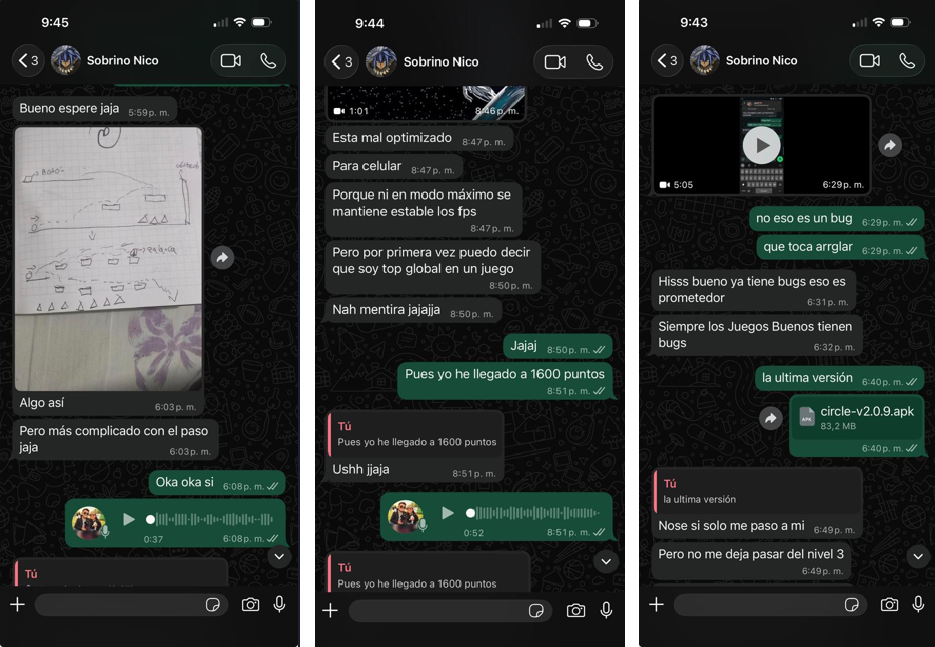
A promise and a WhatsApp chat.

My nephew always asked me: “¿Cuándo vas a sacar tu propio juego?”. Among my home and work responsibilities, time was our greatest enemy. We couldn't physically meet, but we could chat. That's how it was born CIRCLE: a project built in the spare time, between voice messages and code snippets.

My Stack: Vibe Coding with AI

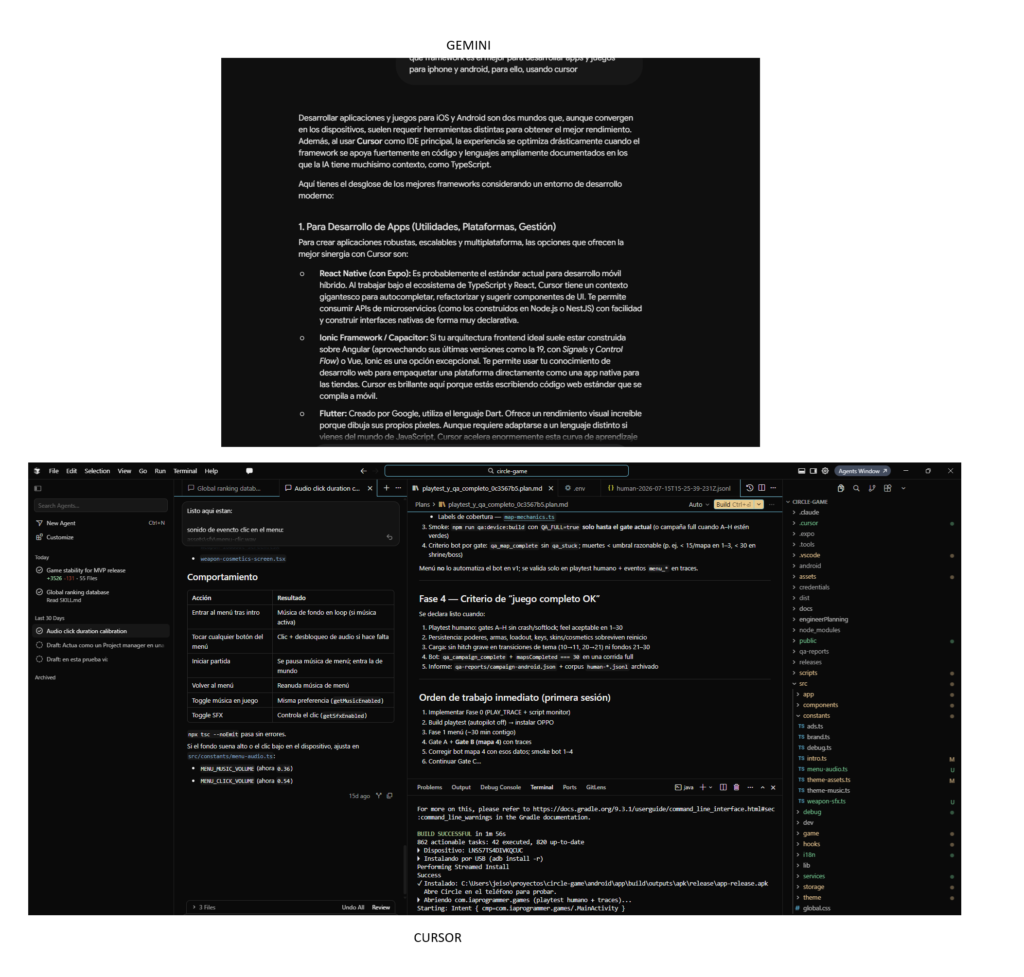
I didn't seek to be a GameDev expert, I sought to be a Project Manager of my own code. I used Gemini to advise me on architecture and technical decisions, and Cursor para “vibe codear” toda la lógica en React Native. Fue una experiencia fascinante: yo definía la estrategia y la IA ejecutaba, mientras yo supervisaba la calidad y la estructura.
Local to Global

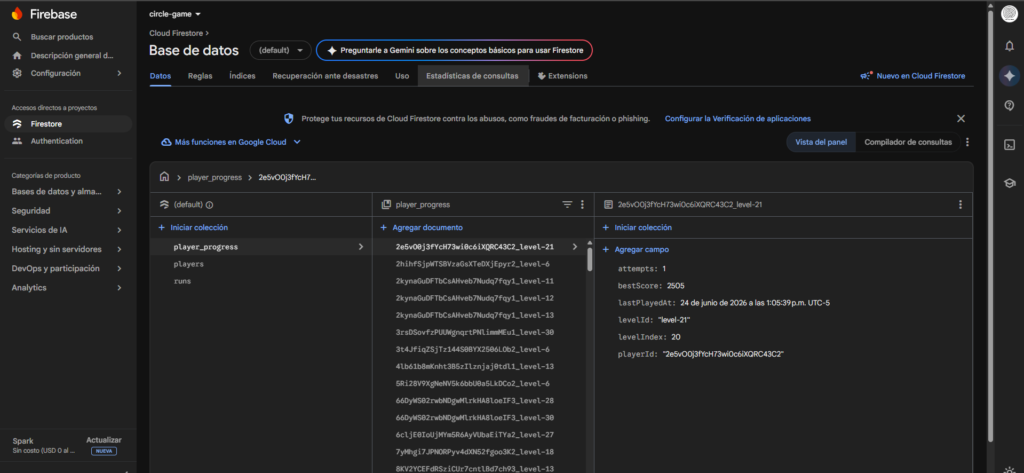
The magic of Firebase At first, the game was going to be a simple local pastime. But when I heard my nephew say, “Por fin seré un top global”, I understood that competition was the lifeblood of the project.

To make the ranking real, I integrated Cloud Firestore in your free plan. Now, each game is saved in the cloud, allowing a global experience, in real time and without its own server. We use anonymous authentication so no one wastes time signing up.

The result? Aún estamos puliendo detalles, pero el juego ya es funcional y divertido. Ha sido una lección de que hoy, con las herramientas correctas, la barrera entre “ser desarrollador de apps” y “crear un juego” es más delgada que nunca.

Do you want to try it? Here's the APK so you can be one of the first to try CIRCLE. I look forward to your feedback before officially launching it on the Play Store!

CIRCLE

I almost ran out of space! How Docker was playing tricks on me (and how I fixed it)

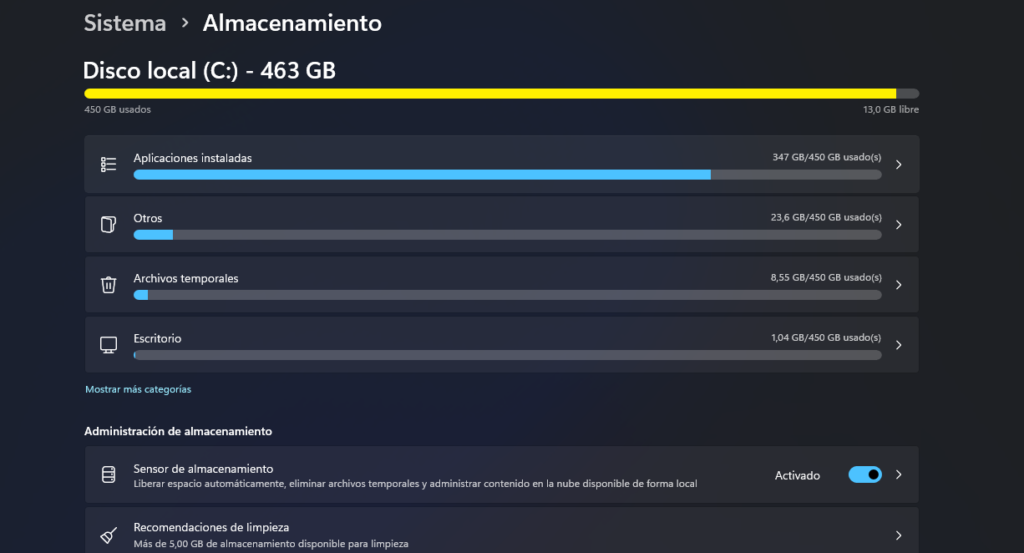
Recently I was trying to compile an application of React Native with Expo. To move forward, I needed to install the Java SDK and configure the JDK, but in trying to do so, Windows 11 threw the dreaded bug at me: “Falta espacio en disco”.

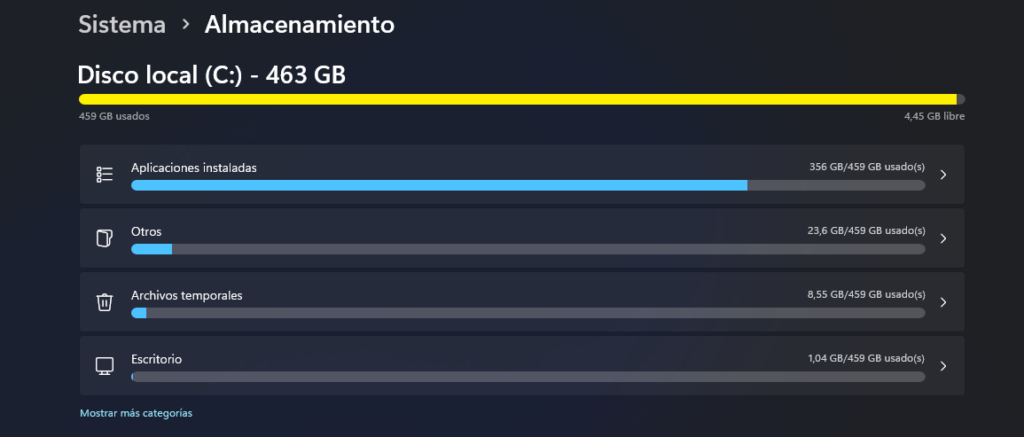
At first, it didn't make sense. I checked the storage settings and the picture was pretty confusing.

The problem: What was consuming my space?

I checked the memory usage in Windows, but the numbers didn't match the free space available. I was blocked, so I decided to ask for help from Cursor (my AI tool for development) by sending you a prompt in debug to analyze my environment.

Note: I have Cursor configured with advanced access to my environment, which allowed you to analyze the entire system in depth.

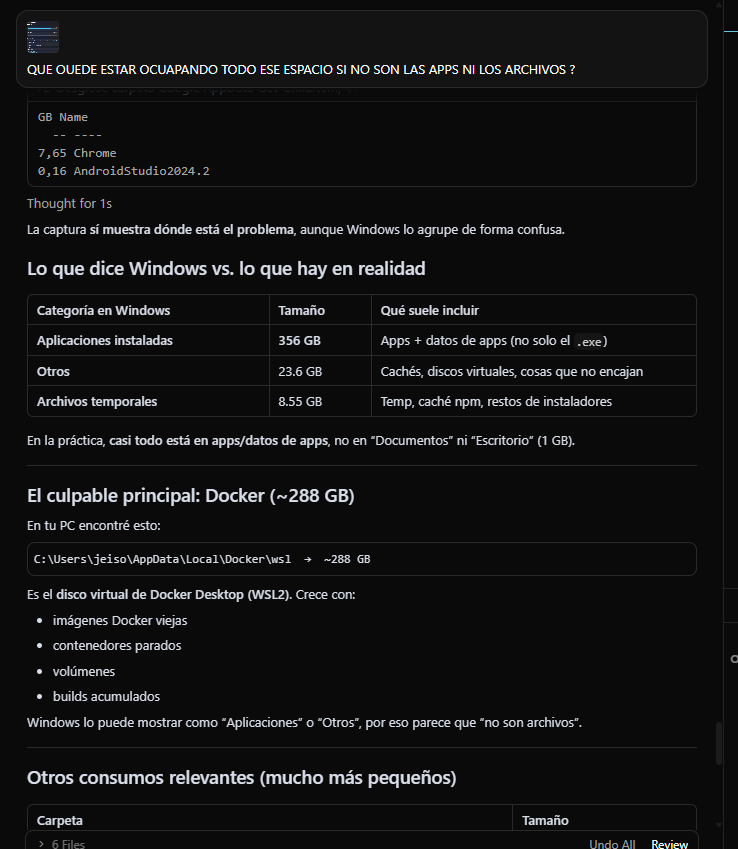
The Reveal of AI

The most incredible thing is that, in a single prompt, Cursor detected the problem without me having to give him specific details. He identified two main culprits:

  1. Docker Desktop: He was accumulating a massive amount of images and volumes that he no longer used.
  2. NPM Cache: He had a number of accumulated temporary files that were no longer needed.

The solution: Get to work

Cursor suggested cleaning up Docker and the NPM cache. These were the commands that saved my day:

  • To review how much space it was actually taking up:Bashdocker system df
  • Para liberar espacio definitivamente (el comando “mágico”):Bashdocker system prune -a --volumes Este comando elimina contenedores detenidos, imágenes no utilizadas y volúmenes huérfanos que estaban ocupando un espacio valioso.
  • Para limpiar la caché de NPM: (Simplemente ejecuté el comando estándar de limpieza de caché que ya muchos conocen).

Resultado

Después de ejecutar estos pasos, el espacio en mi disco volvió a la normalidad. Pude retomar la configuración del SDK y, finalmente, logré compilar mi proyecto para Android sin más contratiempos.

Conclusión: A veces estamos tan enfocados en el código que olvidamos los “monstruos” que viven en el fondo de nuestro sistema. Si usas Docker y te falta espacio, ¡no olvides revisar tus volúmenes e imágenes huérfanas!

¡Mensaje enviado!